
An Interview with Lily Marino: Lessons from a Post-Approval Monitoring visit
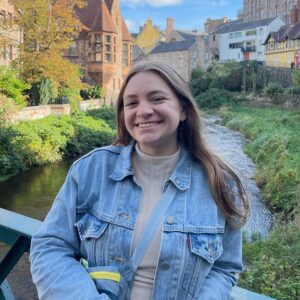 | We interviewed Lily Marino about her experience with an investigator-initiated Post-Approval Monitoring visit. Lily is a PhD student in the Interdisciplinary Affective Science Lab (IASL), advised by Dr. Karen S. Quigley. She graduated in 2022 with a B.S. in Neuroscience from the University of Vermont, where she worked on fMRI and peripheral physiology studies focused on the effects of trauma exposure, and worked on various studies within the UVM emergency department. From 2022-2025, she worked as a research technician in the IASL, and will be continuing this work during her PhD. Her research interests include using experience sampling methods and ambulatory peripheral physiology to measure daily life experience, with a focus on brain-body communication. |
What is your role in Dr. Quigley’s lab? What was your role in the Post-Approval Monitoring visit?
I am a second-year PhD student primarily advised by Dr. Quigley. Before my current role, I was also a research technician within the Interdisciplinary Affective Science Lab (PIs: Drs. Karen S. Quigley, Lisa Feldman Barrett, and Jordan Theriault-Brown). Over the past three years, when I was a research technician and now, I helped design and run a study within our lab, which was the subject of this post-approval monitoring visit. I was responsible for managing our study’s documentation, training of most of our study staff, and recruitment, enrollment, and data collection. Thus, I was involved with requesting the visit from the IRB, preparing all of our study materials, and describing how the study was currently being run on the day-to-day level.
Why did your team request a monitoring visit?
Our study was randomly selected by our funding agency for routine post-approval compliance monitoring. This was conducted by the human subject research protection office that exists under our funding body. To prepare, we decided to request a Post-Approval Monitoring visit form the Northeastern IRB first, who were already familiar with the fine details of our study.
What did you expect going in?
I anticipated that I would be asked to display an example, or several, of all of our documentation, from regulatory forms to consent forms and data. Our team anticipated the visit would function like a hearing, where we had to provide rationale and evidence for most of our study decisions.
What was the monitoring visit like for your team? Was anything different from what you expected?
The self-assessment was extremely handy for us, and actually prompted us to catch several issues that we could prioritize and report as needed. Having a list of all information that is under the purview of a monitoring team made it more clear why these visits are being done, and what standards need to be met for success. The actual visit felt very collaborative, where we walked through each component of the self-assessment and had a chance to ask questions, take notes, and improve our documentation and storage. Because we also had a list of items that would be covered in our funding body’s visit, we were able to tailor what the IRB team focused on the most.
What surprised me the most was how collaborative the visit felt. It was made very clear that the IRB wanted to support our research continuing in the best shape possible, and that all studies have human error, but there are protections we could put in place to reduce error as much as possible. We also had a chance to explain exactly how our team worked, and answer questions that we had never considered from a regulatory body’s perspective. Several of our team members, including me, had never gone through a process like this, so we left feeling like we had tools to make our future research basically audit-proof, through a combination of timely reporting, regular comprehensive checks, and an understanding of what the purpose of a review board is.
Are there any specific changes your team implemented based on the monitoring?
Yes—we implemented several changes. Most importantly was improving our documentation records, so any future monitoring visits or other requests for information would be a breeze. This included downloading PDF copies of all correspondence with the IRB and our funding body, so transitions on our team wouldn’t result in losing communication records. For future studies, we also began to implement a check of necessary versus non-necessary information included in our study materials. In our visit, we discussed how adding additional checkboxes, fillable fields, etc. that were redundant with other materials just increased the chance of human error, without actually providing useful data for us. We made lots of other, smaller changes to our current and future protocols as well based on this visit.
What would you say to a research team that’s considering requesting a Post-Approval Monitoring visit?
I would say that it is always better to catch mistakes and learn best practices sooner rather than later. It’s like an in-house sanity check of all the complex, little details that we can often lose track of as researchers. Personally, I’ve shared lots of tidbits I learned during the visit with my lab and other colleagues, and it’s eased the burden of administrative tasks. The knowledge, clarity, and friendliness of the IRB team made this process something I would highly recommend!